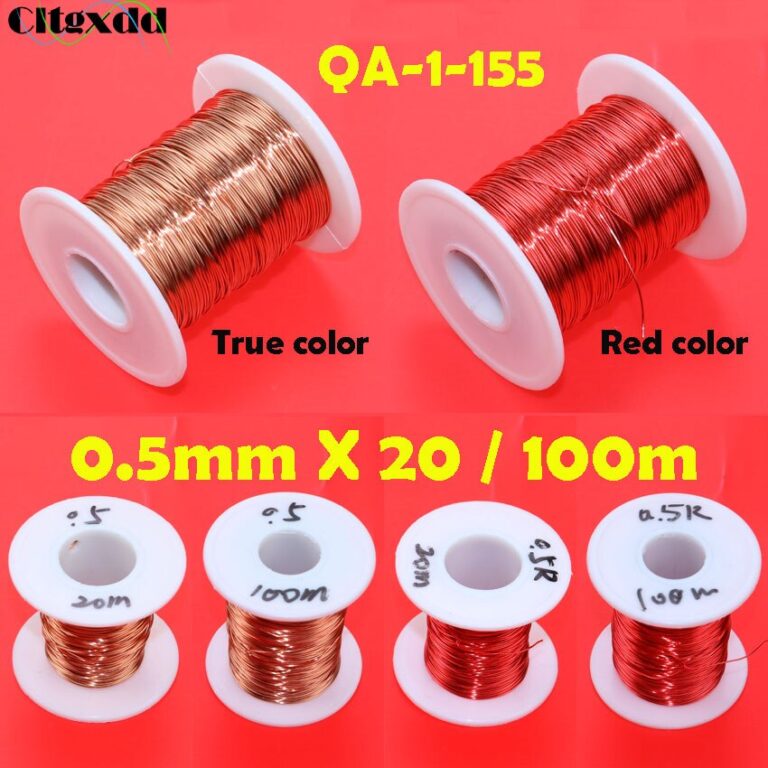
14 AWG 200C Enameled Copper Magnet Wire
14 AWG 200C Enameled Copper Magnet Wire is a defined product configuration for motor, transformer, inductor, solenoid, electromagnet, generator, and electrical repair winding. The listed specifications are 14 AWG, approximately 0.0671 in diameter, 200 C temperature reference, 1.0 lb spool weight, 79 ft length, and natural finish. This information gives engineers, maintenance teams, and purchasing departments a practical starting point for comparison, but the final selection should always be checked against the complete electrical, thermal, mechanical, dimensional, and compliance requirements of the assembly.
This article explains the product definition, construction, parameters, properties, performance, manufacturing process, applications, standards, comparison points, selection method, and ordering questions. It keeps the useful values from the original listing and separates listed facts from details that should be confirmed in a supplier datasheet or inspection record.
Product Definition
Enameled copper magnet wire is a copper conductor covered with a thin electrical insulation film. It is designed to form compact electromagnetic windings in motors, transformers, inductors, relays, solenoids, speakers, and other electrical assemblies. The copper core carries current while the enamel separates adjacent turns without the thickness of a conventional jacketed cable. The 14 AWG designation identifies the listed conductor size, and the 200 C reference identifies the listed thermal selection for the insulation system.
The product should be understood as one part of a larger design. A conductor, insulation system, cable bundle, or reinforcement layer can meet its basic description and still be unsuitable if the finished assembly has the wrong current, resistance, temperature rise, bend radius, winding space, connector layout, or environmental exposure. The correct purchasing description therefore combines the product name with measurable dimensions, quantity, application, and acceptance criteria.
For repeat orders, preserve the approved drawing, sample, specification revision, packaging reference, and inspection method. This makes it easier to identify changes between lots and reduces the risk of selecting a visually similar but technically different replacement.
Key Parameters
| Parameter | Listed value or description |
|---|---|
| Product type | Enameled copper magnet wire |
| Conductor size | 14 AWG |
| Approximate diameter | 0.0671 in |
| Temperature reference | 200 C |
| Spool weight | 1.0 lb |
| Listed length | 79 ft |
| Finish | Natural |
| Typical use | Coil winding and electrical repair |
The listed 1.0 lb and 79 ft values should be confirmed as net wire weight and nominal length before a production order. Actual length can vary with conductor diameter, enamel build, density, winding tension, and the supplier measurement method.
Where the original listing does not state a tolerance, finished diameter, resistance, insulation build, shielding structure, or test result, do not invent a value. Request that information before production approval. A short technical confirmation is especially important when the product is being used to replace an existing part.
Properties and Performance
Copper provides a familiar conductive and formable core for winding. The enamel coating provides turn-to-turn insulation and allows the finished coil to use space efficiently. A 14 AWG conductor can support applications that need a larger current path than fine magnet wire, but it also needs more winding space and a suitable bend radius. The 200 C value should be treated as an insulation selection reference, not as a guarantee that every finished assembly can continuously operate at 200 C.
- Electrical behavior: conductor material, cross-section, length, temperature, and connection quality influence resistance, voltage drop, current density, and signal behavior.
- Thermal behavior: a temperature or insulation designation is a selection reference; the complete assembly still needs a temperature-rise and cooling review.
- Mechanical behavior: winding tension, repeated bending, abrasion, pull force, sharp edges, and strain relief can affect service life.
- Dimensional behavior: conductor size, coating build, outer diameter, and package form affect installation space and production repeatability.
- Termination behavior: enamel, insulation, or jacket material must be removed or prepared using a compatible process before connection.
Manufacturing Process
Production begins with copper rod inspection. Conductivity, chemistry, surface condition, and diameter are checked before the rod is drawn through precision dies. The drawing schedule reduces the rod to the required bare-conductor size for the 14 AWG specification. Drawing tension and die condition are controlled because diameter variation changes resistance, winding fill, length per mass, and mechanical behavior.
The drawn copper is cleaned and prepared for enamel application. Liquid enamel is applied in controlled layers through coating dies or applicators, and the conductor passes through curing ovens. Oven temperature, line speed, coating viscosity, centering, and tension are controlled so the cured film has consistent thickness and adhesion. Multiple coating passes may be used when the required insulation build or dielectric performance demands them.
Finished wire is tested against the approved product specification. Typical checks may include bare and overall diameter, resistance, continuity, pinholes, dielectric breakdown, flexibility, adhesion, abrasion, solderability where applicable, and thermal aging. The wire is then wound onto a spool with controlled tension, labeled with the size and lot details, and packed to protect the enamel from impact and contamination.
Before shipment, the finished product is measured, visually inspected, and packed in a way that protects it from moisture, contamination, crushing, and abrasion. Depending on the agreed specification, quality checks may include dimensions, resistance, continuity, insulation integrity, flexibility, adhesion, dielectric performance, tensile behavior, repeated bending, length, weight, and label accuracy. The exact checks should be documented in the purchase order rather than assumed from a product title.
Applications
This wire can be evaluated for motor and generator winding repair, transformer and power-inductor construction, solenoids, electromagnets, relays, electrical prototypes, and maintenance replacement. It is most suitable when the 14 AWG conductor fits the winding window and the 200 C insulation selection matches the operating environment.
- Motor and generator winding repair
- Transformer and power-inductor coils
- Solenoid and electromagnet winding
- Electrical prototypes and laboratory assemblies
- Short-run maintenance and replacement work
Before using the product as a replacement, compare it with the original part by size, material, insulation, resistance, quantity, connection method, operating temperature, and available installation space. A product that looks similar in a photograph may have a different finished dimension or electrical behavior.
Standards and Quality Verification
Magnet wire is normally purchased against a manufacturer datasheet, customer drawing, or recognized winding-wire standard. Depending on the destination and equipment, the purchase may reference IEC, NEMA, JIS, GB, UL recognition, or an internal quality specification. The exact standard and temperature-class test method must be confirmed rather than inferred from the phrase “200 C.”
A practical incoming inspection can include visual condition, dimensional measurement, electrical continuity, resistance, insulation review, length or weight verification, and packaging and label checks. For higher-risk assemblies, add the applicable dielectric, thermal aging, abrasion, flex, tensile, or compliance-document review. Record the test method, sample identification, acceptance limit, lot number, and result so the same decision can be repeated for future deliveries.
Comparison with Other Options
| Option | Advantages | Considerations |
|---|---|---|
| 14 AWG enameled copper wire | Defined copper conductor for compact insulated winding | Needs enough winding space and controlled enamel removal |
| Thinner magnet wire | More turns can fit in a limited window | Higher resistance may result |
| PVC hookup wire | Easy conventional stripping | Thicker jacket reduces winding density |
| Aluminum magnet wire | Lower material weight | Different conductivity and termination requirements |
Comparison should be based on the complete application rather than on repeated keywords in a product title. A thicker conductor is not automatically better, a higher temperature number does not replace cooling design, and a more flexible cable is not automatically suitable for a higher-current or shielded application.
Related Internal Links
See also 0.6mm QZY-2-180 Enameled Copper Wire and 20m Multi-Strand Enameled Headphone Cable 8/0.08mm. For a product directory, visit enameled copper wire.
Why Choose This Product?
Choose this product when the project needs a comparatively large copper winding conductor, a listed 200 C insulation reference, and a defined 1.0 lb, 79 ft supply format. The 0.0671 in reference helps engineers begin winding-space and resistance calculations, while the natural finish supports simple product identification.
- Clear AWG and diameter references support engineering review.
- Practical spool quantity suits repair, prototypes, and shorter production runs.
- Copper construction is familiar for motor, transformer, and coil work.
- Temperature reference creates a clear question for datasheet verification.
- Objective size, weight, length, and insulation details improve purchasing clarity.
The strongest reason to choose this product is that its selection can be documented with specific, checkable information. Buyers can compare the listed size, length, construction, temperature or compliance reference, packaging, and intended use with the actual project requirement. If a requirement is missing, it becomes a clear question for the supplier instead of an unspoken assumption.
How to Select, Install, and Handle It
- Confirm the bare conductor size and finished diameter tolerance.
- Calculate the required winding length and compare it with 79 ft.
- Check the winding window, turn count, bend radius, and tension limits.
- Confirm the insulation temperature requirement and applicable standard.
- Define the enamel removal and connection process before production.
- Inspect spool labels, package condition, length, weight, and surface condition.
Keep the product clean, dry, and protected from unnecessary mechanical stress. Use smooth guides and suitable tools during installation. Inspect the finished assembly at bends, lead exits, solder joints, connector entries, and other stress points. For repeat work, keep a retained sample and a simple receiving checklist so later operators follow the same process.
FAQ
Q: What are the main listed parameters?
The wire is listed as 14 AWG, approximately 0.0671 in diameter, 200 C, natural finish, 1.0 lb, and 79 ft.
Q: Can it be used for motor or transformer winding?
It can be evaluated when the conductor size, winding space, current, temperature rise, and insulation requirements match the design.
Q: Does 200 C mean the complete motor can run continuously at 200 C?
No. The temperature reference applies to the insulation selection. The complete winding system requires its own thermal and cooling review.
Q: Can the enamel be soldered directly?
Do not assume direct solderability. Confirm the insulation system and use an approved preparation method.
Q: What should be requested for production?
Request the datasheet, tolerance, standard, lot information, spool details, and inspection requirements.
Contact LP Industry
Contact LP Industry with the required product size, application, quantity, packaging preference, delivery location, operating conditions, and inspection requirements. Include a drawing, original part reference, sample, winding dimensions, connector diagram, or compliance requirement when available. Our team can review the listed construction, confirm the technical details that are not shown in the original description, and provide current availability, documents, pricing, and lead-time information.
A precise inquiry helps engineering and purchasing teams compare the same product definition. It also reduces avoidable substitutions caused by unclear dimensions, incomplete temperature information, missing cable-core details, or unverified compliance claims.