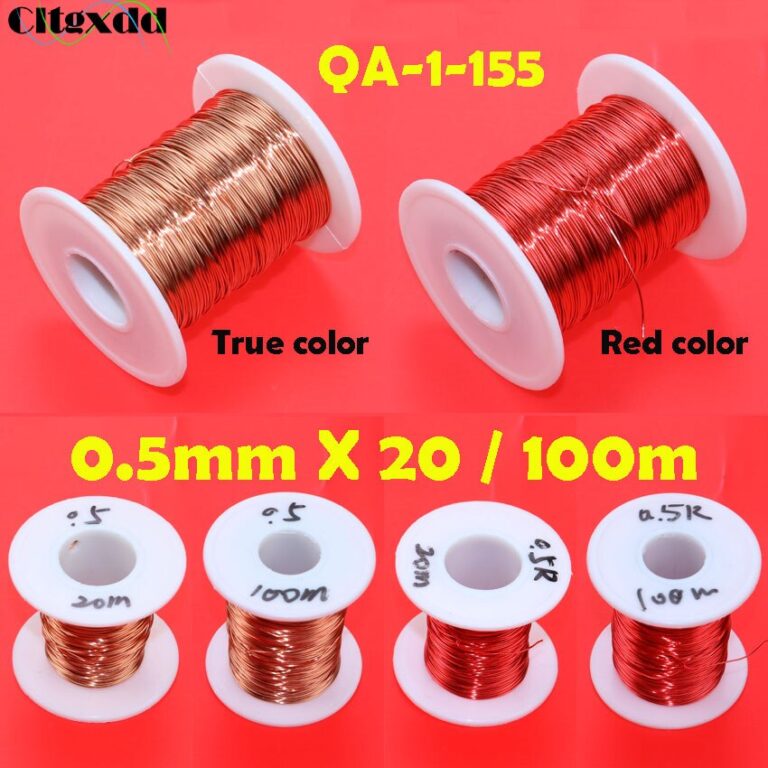
0.8mm/1.0mm/1.2mm Enameled Copper Magnet Wire for Coil Winding
enameled copper magnet wire is used when buyers need diameter accuracy, insulation quality, stable resistance, and easy winding performance for coil winding, motors, transformers, inductors, electromagnets, and repair work. The original listing has been reorganized into a clearer technical article so that engineers, repair teams, and purchasing staff can understand the main selection points before sending an inquiry. The key idea is simple: the conductor must match the electrical requirement, while the insulation and package must support the winding process and final operating environment.
For related product categories, buyers can compare this item with enameled copper wire and enameled flat copper wire. These internal references help users review similar materials, conductor shapes, and winding options without leaving the LP Industry product information structure.
Product Overview
This product is based on copper conductor with enamel insulation for compact and reliable electrical windings. It is suitable for users who need a practical winding or electrical connection material rather than a general-purpose bare conductor. In coil applications, turns are placed close together, so insulation continuity, surface smoothness, and dimensional consistency are important. A wire that looks similar in a simple product photo may perform very differently if the diameter tolerance, enamel quality, or conductor material is not suitable for the device.
When choosing a specification, buyers should start with the target resistance, working current, available winding space, expected temperature rise, and production method. A smaller diameter can fit more turns into a limited area, but it usually increases resistance and requires more careful handling. A larger diameter provides lower resistance and better mechanical strength, but it needs more winding space and may reduce the possible number of turns.
Key Selection Points
- Conductor size: Match the diameter or width to the required current, resistance, number of turns, and available space.
- Insulation requirement: Confirm the enamel type, insulation thickness, thermal class, and voltage requirement before production use.
- Winding method: Manual repair, prototype winding, and machine winding may require different softness, surface finish, and spool formats.
- Operating environment: Consider heat, vibration, moisture, abrasion, and mechanical stress during the final application.
- Testing requirement: For batch orders, ask for resistance data, dimensional tolerance, surface quality, and packing details.
Common Applications
enameled copper magnet wire can be used in coil winding, motors, transformers, inductors, electromagnets, and repair work. It may also be selected for laboratory trials, prototype development, maintenance work, and small production runs. In repair work, the safest method is to match the original conductor size and insulation grade as closely as possible. If the original winding data is unknown, measure the old wire after removing insulation, check the resistance, and compare the available winding window before selecting a replacement.
For applications that require nearby specifications or different conductor geometry, buyers may also review fine enamelled round copper wire and 0.1-3.0mm coil winding wire. Internal comparisons are useful because wire products often have similar names, while the real difference may be conductor material, insulation class, diameter range, or intended winding method.
Material and Performance Notes
The conductor and insulation should be evaluated together. Good conductivity alone is not enough if the insulation is damaged during winding or if the wire cannot tolerate the working temperature. A smooth surface helps reduce scratches during winding, while stable dimensions make it easier to predict coil resistance. For production use, sample testing is strongly recommended before confirming a large order.
Buyers should avoid relying only on a long marketplace-style product title. A cleaner specification should include the product type, material, size range, insulation information, packing format, and application. If the product will be used in a certified assembly, the final material choice should be checked against the applicable standard or engineering drawing.
Handling and Processing
Store the wire or strip in a dry, clean area away from dust, oil, moisture, and sharp metal edges. During handling, avoid sudden pulling, repeated bending at one point, or contact with rough tooling. Fine sizes require especially careful tension control. If the material must be stripped, soldered, welded, crimped, or connected to terminals, test the preparation method on a short sample first.
For winding operations, stable tension and clean guides can reduce defects. If the material is used in a dense multilayer coil, insulation damage may not be visible immediately, but it can cause failures during electrical testing or long-term operation. This is why incoming inspection, trial winding, and final resistance checks are useful for both repair and production work.
How to Send an Inquiry
To receive a more accurate recommendation, provide the required size, quantity, application, working temperature, resistance target, packing preference, and any test or certificate requirement. Photos or drawings are helpful when the part is being replaced or when the winding space is limited. Clear information helps LP Industry match a practical specification instead of relying on unclear old product titles.
FAQ
How do I choose the right size?
Choose the size according to current, resistance, number of turns, available space, and the mechanical strength required by the application. A sample winding test is recommended before batch use.
Can this product be used for repair work?
Yes, it can be used for repair when the conductor size, insulation type, and working conditions match the original part. Always compare the old part carefully before replacement.
What should be confirmed before ordering?
Confirm conductor material, size tolerance, insulation grade, thermal requirement, packing length or weight, and any required testing data.
Why should I avoid long keyword-stuffed product titles?
Long titles often mix sizes, applications, and unrelated terms. A clear technical specification is more useful for purchasing and engineering decisions.
Additional Buyer Notes
For purchasing teams, the most useful inquiry includes the exact size, required quantity, operating condition, packing format, and any inspection requirement. If the material will be used in a replacement job, include photos, measured dimensions, and the target resistance where possible. If it will be used in new production, confirm sample approval before bulk ordering. This practical information helps LP Industry recommend a suitable specification and reduces the risk of choosing a product only because the old title contained many keywords.
Summary
0.8mm/1.0mm/1.2mm Enameled Copper Magnet Wire for Coil Winding is a practical choice for buyers who need diameter accuracy, insulation quality, stable resistance, and easy winding performance. By confirming the conductor size, insulation requirement, application, and testing method, buyers can reduce selection mistakes and improve winding reliability. LP Industry can help review the intended use and suggest a suitable specification for repair, prototype, or production needs.