Enameled Copper Magnet Wire for Precision Coil Winding
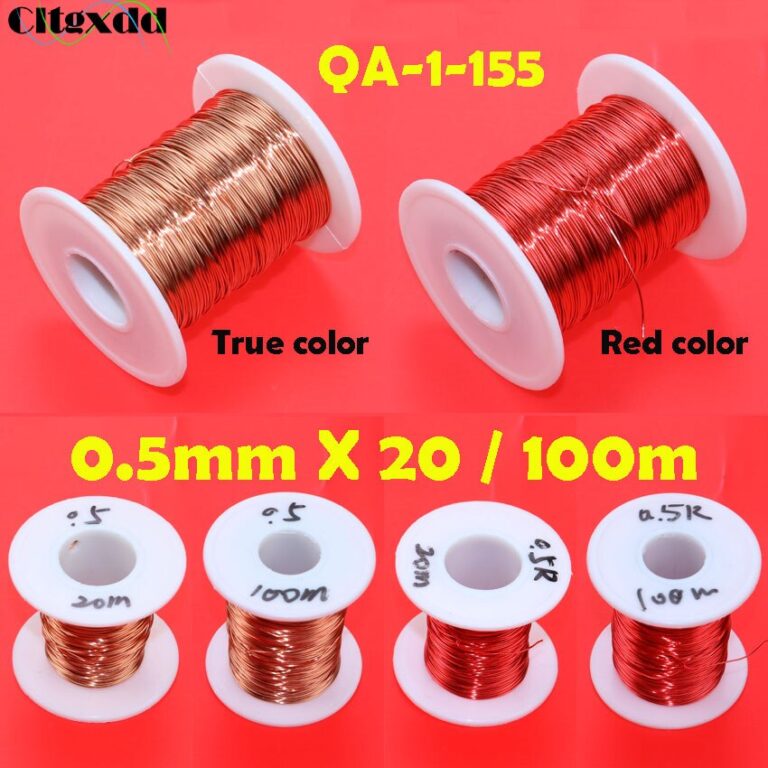
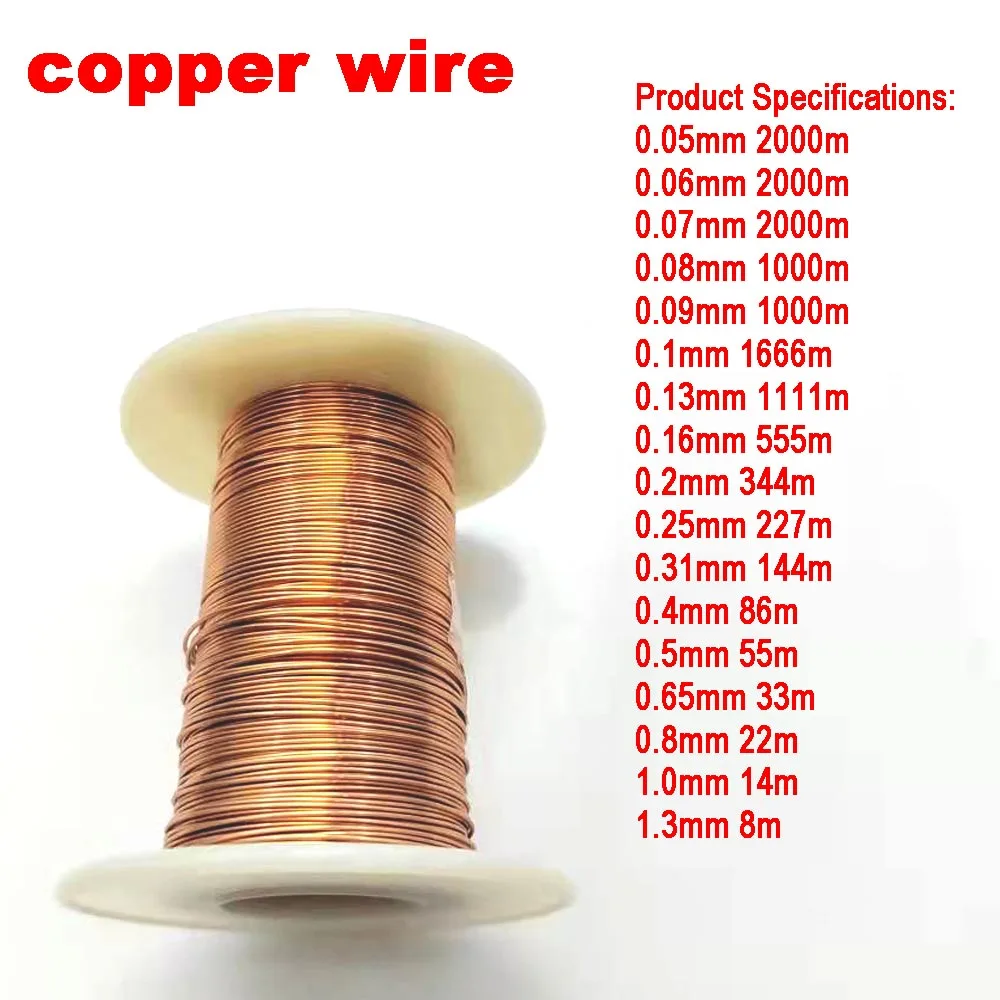
Enameled copper magnet wire is a practical choice for compact coils, electrical repair, motor rewinding, transformers, inductors, solenoids, and electromagnetic prototypes. This product covers small and medium wire diameters from 0.05 mm to 1.3 mm, giving buyers a useful range for different winding densities, resistance targets, and available coil space. The copper conductor provides good electrical conductivity, while the enamel coating creates a thin insulation layer between turns so that the wire can be wound closely without short-circuiting.
For buyers comparing different winding materials, this article focuses on how to choose the right diameter, how the wire is commonly used, and what details should be confirmed before placing an order. If you need a broader product category page, you can also review our enameled copper wire information for related conductor types and winding options.
Available Diameter Range and Selection Logic
The listed range includes 0.05 mm, 0.1 mm, 0.2 mm, 0.5 mm, 0.8 mm, 0.9 mm, 1.0 mm, and 1.3 mm enameled copper wire. Fine diameters such as 0.05 mm and 0.1 mm are usually selected when the coil must fit into a very small winding window or when a high number of turns is required. These sizes are suitable for miniature coils, signal inductors, sensors, watch and model components, small repair jobs, and delicate electronic assemblies. They should be handled with steady tension because very thin copper wire can stretch, kink, or break if pulled too hard.
Diameters such as 0.2 mm and 0.5 mm offer a balance between compact winding and easier handling. They are often used for small transformers, electromagnets, repair coils, buzzers, speakers, relays, and educational projects. Larger diameters such as 0.8 mm, 0.9 mm, 1.0 mm, and 1.3 mm provide lower resistance per unit length and better mechanical strength, so they are useful when the design requires more current capacity or a stronger winding structure. The best diameter depends on coil resistance, working current, heat rise, winding turns, and the available bobbin space.
Typical Applications
Enameled copper magnet wire is widely used in coil-based electrical parts. Common applications include small motors, transformers, inductors, chokes, relay coils, solenoid valves, sensors, speakers, electromagnetic locks, ignition coils, instrument coils, and laboratory demonstration coils. In repair work, it can be used to replace damaged winding wire if the diameter and insulation type match the original design. In prototype work, it allows engineers and hobby users to test different turns, coil shapes, and resistance values before finalizing a product.
For very fine winding requirements, buyers may also compare similar fine-gauge products such as 0.02mm enamelled round copper wire for coil applications. For wider diameter coverage, the article about 0.1-3.0mm coil winding wire may also be useful when comparing options for electromagnets and motor winding.
Why Enamel Insulation Matters
The enamel film is one of the most important parts of magnet wire. It is thin enough to keep the coil compact but strong enough to separate neighboring turns during normal use. Without this insulation, the turns would contact each other directly and reduce the effective number of turns, causing short circuits or unstable electrical performance. A good enamel surface should be smooth, continuous, and suitable for the intended winding process.
Different applications may require different insulation grades or thermal ratings. A simple repair coil may only need a standard polyurethane or polyester type, while a motor, transformer, or higher-temperature part may require a higher thermal class. The exact requirement should be confirmed according to the working temperature, voltage, duty cycle, and safety standard of the finished product. Buyers should avoid selecting wire by diameter alone when the final coil will be used in a commercial or safety-sensitive device.
How to Choose the Correct Wire Size
- Match the original design: For repair, measure the original conductor diameter after removing the enamel and compare the resistance of the old winding.
- Check available space: A larger diameter may not fit the required number of turns, while a smaller diameter may increase resistance and heat.
- Estimate current load: Higher current usually requires a thicker conductor, better heat dissipation, or a different coil design.
- Confirm insulation needs: Ask for enamel type, thermal class, and insulation thickness when the application has specific performance requirements.
- Test before production: Wind a sample coil and check resistance, temperature rise, insulation continuity, and mechanical fit.
Handling, Stripping, and Soldering
Fine enameled copper wire should be stored in a clean, dry area and protected from moisture, dust, oil, and sharp edges. During winding, use smooth guides and stable tension. Scratches on the enamel can reduce insulation reliability, especially in dense multi-layer coils. When working with very fine sizes, avoid repeated bending at the same point because the conductor can fatigue or break.
Before soldering, the enamel must usually be removed from the wire end. Depending on the enamel type and wire diameter, stripping can be done by careful mechanical scraping, thermal removal, chemical stripping, or solder pot processing. Very fine wires need extra care because aggressive scraping can reduce the conductor diameter or break the wire. Always test the stripping method before applying it to a finished coil.
Comparison with Other Winding Wire Types
Round enameled copper wire is suitable for many general-purpose coils because it is easy to wind and widely available in small diameters. For applications that need a higher slot fill factor or a more compact rectangular winding shape, buyers may compare it with enameled flat copper wire. Flat wire can improve space utilization in some designs, but it also requires different winding equipment and bending control.
Copper-clad aluminum and enameled aluminum wire may be considered when weight or cost is more important than conductivity, but pure copper magnet wire is usually preferred when stable electrical performance and lower resistance are priorities. The final choice should be based on electrical requirements, weight, temperature, cost, processing method, and the reliability target of the finished component.
Quality Details to Confirm Before Ordering
Before purchasing enameled copper magnet wire, confirm the conductor diameter, tolerance, enamel type, thermal class, spool size, color, packing length or weight, and test requirements. For production use, buyers may also request resistance data, insulation breakdown information, elongation, surface quality, and certificate availability. If the wire will be used in a certified product, the final specification should be checked against the relevant standard before mass production.
It is also helpful to provide the application when sending an inquiry. A coil for electronic repair, a prototype electromagnet, a small motor, and a transformer winding may all use enameled copper wire, but their ideal specifications can be different. Clear application details help suppliers recommend a more suitable diameter, insulation grade, and packing format.
FAQ
What is the focus application of this enameled copper magnet wire?
It is mainly used for coil winding, small motors, transformers, inductors, repair work, electromagnets, and prototype electrical parts that need insulated copper turns.
Which diameter is best for a small coil?
Small coils often use 0.05 mm, 0.1 mm, or 0.2 mm wire when many turns must fit into a limited space. The final choice depends on resistance, current, and winding space.
Can this wire be soldered directly?
Usually the enamel must be removed from the end before soldering. The right stripping method depends on the enamel type and wire diameter.
Is this wire suitable for motor or transformer winding?
It can be suitable when the diameter, insulation grade, thermal class, and electrical design match the motor or transformer requirement. For production use, confirm the full specification before ordering.
Inquiry Support
If you are sourcing enameled copper magnet wire for repair, prototype winding, or batch production, please provide the target diameter, required quantity, application, working temperature, resistance target, and packing preference. These details make it easier to match the correct wire and avoid ordering a size that does not fit the coil design.